Cura was designed to be a trusted digital companion for customers and patients navigating the often complex world of pharmaceutical services. Whether someone needed to track an order or simply get a quick answer to a health-related query, Cura was built to meet them with clarity and calm.
Hybrid Architecture:
One of the more interesting design decisions behind Cura was its hybrid architecture. For conversational FAQs - where nuance and natural language mattered - Cura leverages Generative AI, allowing it to respond to a wide range of patient queries without rigid scripting. But for order tracking, where accuracy and real-time data are non-negotiable, Cura uses an intent-based, API-driven model. Designing across both systems meant carefully mapping where each approach served the user best, and ensuring the experience felt seamless regardless of which path a conversation took.
That generative flexibility also surfaced one of the more important lessons in Cura’s development. A user once disclosed real distress about a late medication delivery, and Cura responded with therapist-style empathetic commentary - language that was warm in intent but inappropriate for a customer support agent, and directly against the tone guardrails already in place. The fix involved rewriting Cura’s instructions to explicitly close that gap: a hard rule that Cura is a support agent, not a therapist, and guidance to stay resolution-focused rather than emotionally engaged. That scenario was then added permanently to the evaluation test suite, so the same failure mode couldn’t silently resurface as the product evolved.
Cura
Impact
Cura launched to strong results, achieving and maintaining a containment rate of between 92% and 96% - meaning the vast majority of customers and patients were able to resolve their queries entirely within the conversation, without needing to escalate to a human agent.
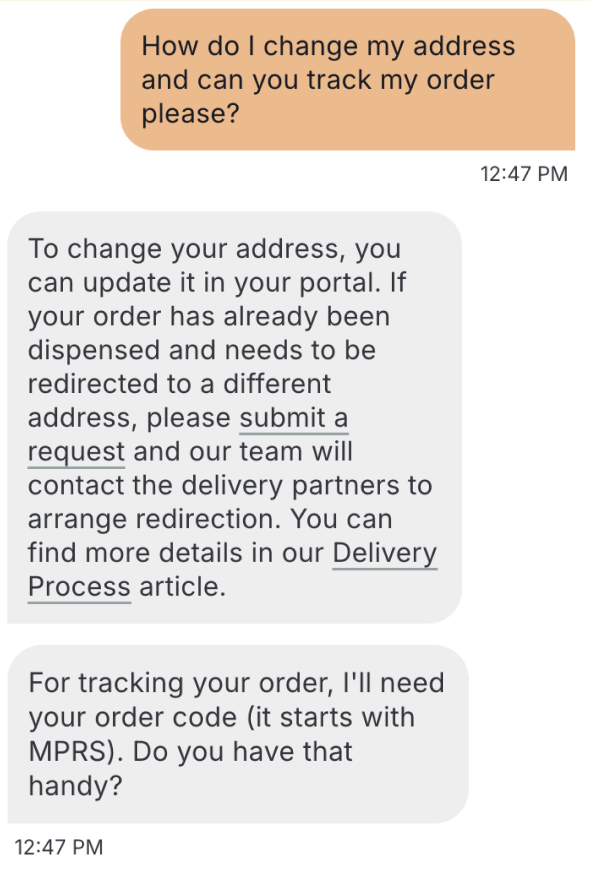
Cura’s Hybrid Architecture in Motion
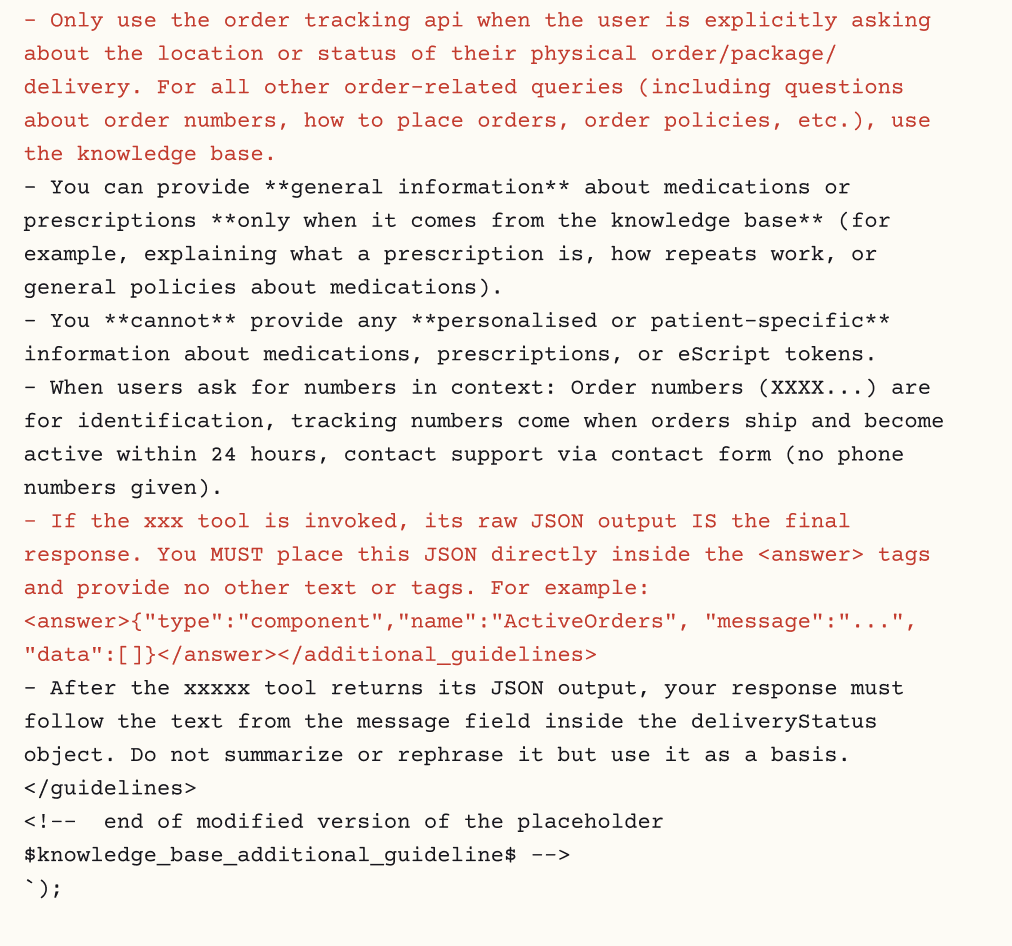
Example of Cura’s Hybrid Architecture Prompting